Knowledge guide
How to Verify a Vietnam Supplier Before You Issue a Purchase Order
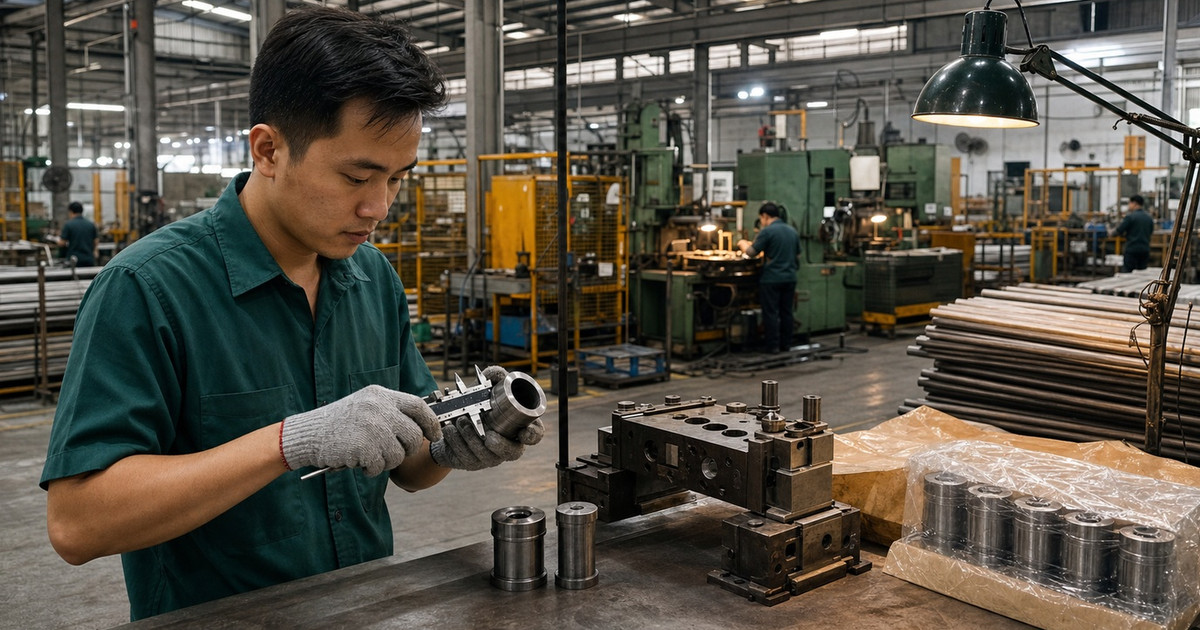
A practical Vietnam supplier verification checklist for importers covering licenses, production fit, samples, quality controls, payment risk, and red flags.
A Vietnam supplier should not be approved from a quotation alone. Before you issue a purchase order, verify seven things: legal identity, production capability, product fit, sample reliability, quality control, export experience, and payment risk. If one of these is unclear, slow down. A cheaper unit price can become expensive if the supplier cannot produce consistently, communicate clearly, or resolve problems when something goes wrong.
When I support sourcing projects through Nguyen the Sourcer, I treat supplier verification as a decision process, not a paperwork exercise. The goal is not to find a perfect factory. The goal is to understand what kind of supplier you are dealing with, what risks are acceptable, and what must be controlled before money moves.
This guide is for importers considering Vietnam for furniture, apparel, textiles, packaging, consumer goods, mechanical parts, electronics accessories, coffee, or agricultural products.
Why supplier verification matters in Vietnam sourcing
Vietnam has strong manufacturing capacity, but the supplier landscape is mixed. You may speak with direct factories, trading companies, export agents, small workshops, subcontractors, or companies that combine several roles. None of these are automatically bad. The problem starts when the supplier's real role is different from what the buyer assumes.
For example:
- A trading company may quote well, but have limited control over production.
- A small workshop may be flexible, but weak on documentation and repeatability.
- A factory may be legitimate, but not suited to your material, tolerance, packaging, or compliance needs.
- A supplier may make a similar product, but not at the quality level your market expects.
Verification gives you a clearer picture before you commit.
If you need a structured sourcing process, Nguyen LNP provides Vietnam sourcing services for importers covering supplier research, outreach, comparison, verification notes, sample coordination, and decision-ready reporting.
The answer-first supplier verification checklist
Use this checklist before approving a supplier for sampling or purchase order negotiation.
| Verification area | What to check | Why it matters |
|---|---|---|
| Business identity | Company name, tax code, address, registration status | Confirms the supplier exists and matches the contact details |
| Supplier role | Factory, trader, exporter, workshop, or mixed model | Shows how much control they have over production |
| Product fit | Similar products, materials, specifications, tolerances | Reduces the chance they are learning on your order |
| Capacity | Monthly output, lead time, equipment, labor, peak season load | Helps test whether their promise is realistic |
| Quality process | Incoming inspection, in-process checks, final inspection, defect records | Shows whether quality is managed or improvised |
| Export experience | Markets served, Incoterms used, shipping documents, packaging standards | Reduces documentation and logistics risk |
| Communication | Response speed, technical clarity, willingness to answer details | Predicts how they will behave when problems appear |
| Payment risk | Deposit terms, beneficiary name, bank details, contract details | Protects against fraud and weak accountability |
A supplier does not need to score perfectly in every row. But weak answers should be visible before the first deposit.
Step 1: Confirm the company identity
Start with the basics. Ask for the legal company name in Vietnamese, tax code, registered address, business license, export license if relevant, and the name of the person responsible for your project.
Then compare these details across:
- Email signature
- Website
- Quotation
- Proforma invoice
- Business registration details
- Bank account beneficiary
- Google Maps or local map listing
- Company stamp if used
Small mismatches are common, especially between English and Vietnamese names. Serious mismatches need explanation. If the quotation comes from one company and the bank account belongs to another, do not ignore it. Ask why, document the answer, and decide whether the structure is acceptable.
Step 2: Understand if they are a factory or trader
Many buyers ask, “Are you a factory?” The better question is, “Which parts of this order do you produce yourself, and which parts are outsourced?”
For furniture, a supplier may do assembly in-house but outsource metal frames, upholstery, finishing, or packaging. For apparel, they may cut and sew in-house but outsource dyeing, printing, embroidery, washing, or labels. For packaging, they may print in-house but outsource lamination or special coatings.
This is not always a problem. Vietnam supply chains often rely on specialized partners. The risk is hidden subcontracting with no quality control.
Ask practical questions:
- Which production steps are done at your facility?
- Which steps are outsourced?
- Can you share photos or short videos of the relevant production area?
- Who controls inspection for outsourced steps?
- Have you made this exact or similar product before?
The answer should be specific, not generic.
Step 3: Check product fit before price comparison
A low quote from the wrong supplier is not useful. Before comparing prices, check whether the supplier understands your product type, material, finish, tolerance, testing needs, labeling, and packaging.
For different industries, product fit means different things:
- Furniture: wood species, moisture content, joinery, finishing, hardware, carton drop protection.
- Apparel and textiles: fabric composition, GSM, shrinkage, color fastness, size tolerance, trims.
- Packaging: board grade, printing method, color control, coating, food-contact requirements.
- Mechanical parts: drawings, tolerance, material grade, surface treatment, measurement tools.
- Electronics accessories: component sourcing, assembly control, certifications, packaging safety.
- Coffee and agricultural goods: grade, moisture, defect rate, origin, processing method, traceability.
If the supplier cannot discuss these details, they may still be able to quote, but they are not yet ready to receive a purchase order.
Step 4: Treat samples as a verification tool
Samples are not just for seeing the product. They test communication, interpretation, timing, packaging, and problem solving.
Before ordering samples, provide a clear sample brief:
- Product specification
- Required material or reference standard
- Color, finish, size, tolerance
- Branding or no-brand instruction
- Packaging requirement
- Expected sample date
- What you will inspect after receiving it
When the sample arrives, compare it against the brief. Do not only ask, “Is this good?” Ask:
- Did they follow the exact instruction?
- Did they warn about risks before making it?
- Did they explain deviations clearly?
- Was the packing suitable for international shipping?
- Did the sample match the quoted production method?
A good sample with poor communication is still a warning sign. A flawed sample with clear explanation and fast correction can sometimes be a better sign than a polished sample that the supplier cannot reproduce.
Step 5: Review quality control before negotiating hard
Many buyers negotiate price first and quality later. That creates problems. If the supplier has to reduce cost before quality expectations are clear, they may change material, labor time, subcontractors, or inspection effort.
Ask how quality is controlled:
- Do they inspect raw materials?
- What checks happen during production?
- What is checked before packing?
- Do they keep defect records?
- Can they provide inspection photos during production?
- Can they accept third-party inspection?
- What happens if defects exceed the agreed limit?
For repeat orders, ask for a simple quality agreement. It does not need to be complicated, but it should define the product standard, inspection method, defect categories, acceptable limits, packing requirements, and corrective action process.
Step 6: Check export readiness
A supplier may be good at local production but weak at export. For importers, export readiness matters.
Confirm whether they can handle:
- Commercial invoice
- Packing list
- HS code discussion
- Certificate of origin if needed
- Fumigation or phytosanitary documents if relevant
- Product certificates where required
- Correct carton marks
- Palletization or container loading plan
- FOB, EXW, CIF, or other Incoterms
For agricultural products, packaging, wood furniture, and regulated consumer goods, documentation can be as important as production. If your market has compliance requirements, raise them before the supplier quotes final pricing.
Step 7: Watch for red flags before sending a deposit
Some red flags are obvious. Others are subtle.
Be careful when a supplier:
- Refuses to provide legal company details.
- Pushes for fast deposit before technical questions are answered.
- Uses inconsistent company names across documents.
- Cannot explain whether they are factory or trader.
- Sends only showroom photos, not production photos.
- Avoids sample correction details.
- Quotes far below other suppliers without explaining why.
- Refuses reasonable inspection.
- Changes payment beneficiary at the last minute.
- Gives only vague answers such as “no problem” or “same quality.”
One red flag does not always mean fraud. It does mean you need to pause and verify more.
A practical verification sequence
For most sourcing projects, I recommend this order:
- Shortlist suppliers based on product fit, not price only.
- Confirm company identity and supplier role.
- Request a detailed quotation with assumptions.
- Compare technical understanding across suppliers.
- Order samples from the strongest candidates.
- Review sample quality and communication behavior.
- Discuss quality control, inspection, and export documents.
- Negotiate price, payment terms, and production timeline.
- Approve the first purchase order only after risks are visible.
This sequence saves time because weak suppliers usually reveal themselves before sampling or before deposit.
FAQ
Do I always need a factory audit in Vietnam?
Not always. For small trial orders, supplier identity checks, sample review, document review, and production photos may be enough. For larger orders, custom products, regulated goods, or tight tolerances, an on-site audit or third-party inspection is more useful.
Is a trading company always worse than a factory?
No. A capable trading company can be useful when a product needs several production steps or when you need English communication and export support. The key is transparency. You need to know who produces what and who is responsible for quality.
What payment terms are normal?
Many suppliers request a deposit before production and balance before shipment or after inspection. The exact terms depend on product, order size, supplier relationship, and customization. Avoid sending payment until the company identity, bank beneficiary, product specification, and commercial terms are clear.
What is the biggest mistake buyers make?
The biggest mistake is treating supplier verification as a formality after choosing the lowest quote. Verification should happen before final supplier selection, because it changes how you compare price, risk, and reliability.
Final note
Vietnam can be a strong sourcing base when the supplier is matched carefully to the product and buyer requirements. The work is not only finding names. It is filtering, checking, asking specific questions, and making the risks visible before a purchase order is issued.
If you want help building a supplier shortlist or verifying Vietnam suppliers before you commit, email [email protected] with your product details, target quantity, market, and current stage of sourcing.
Need help applying this?
See the related service page: Vietnam sourcing services for importers or email [email protected].