Knowledge guide
Vietnam Apparel Sourcing Checklist: From Tech Pack to Shipment
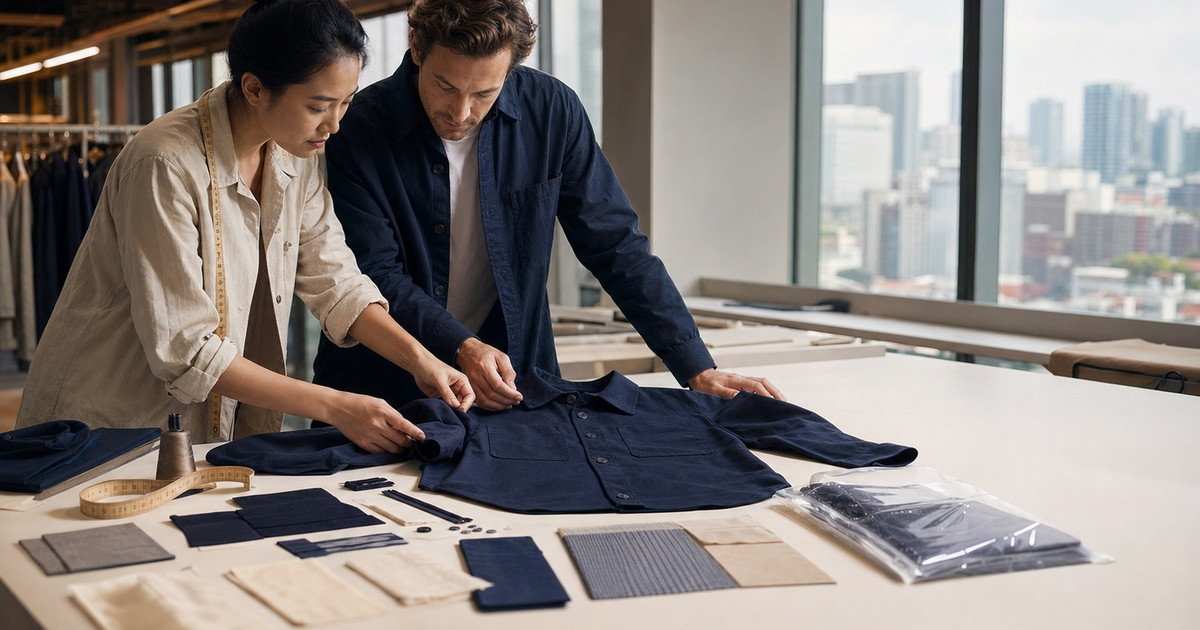
Vietnam apparel sourcing checklist for tech packs, factory fit, quote comparison, samples, compliance, quality control, and shipment release.
Data accurate as of July 2026 based on market research
Contents
Introduction
Define the product and destination
Build an RFQ-ready tech pack
Screen for product fit and factory identity
Compare quotes and understand MOQ
Approve samples and freeze the revision
Match audits and compliance to the real risk
Control production and shipment release
Factory, trader, or sourcing partner
Common misconceptions
FAQ
Conclusion
Truth Box
| Key Point | Insight |
|---|---|
| Product fit comes before price | A capable factory can still be wrong for your garment, materials, volume, or finish |
| One revision must control the order | The RFQ, quote, sample, purchase order, and inspection need the same specification baseline |
| MOQ is not one headline number | Style, color, fabric, trims, labels, packaging, and line setup can each create a minimum |
| Audits answer different questions | Social compliance, technical capability, and product compliance need separate evidence |
| Shipment is an approval decision | Inspection results, corrections, documents, and packing evidence should support release |
Introduction
A Vietnam apparel sourcing checklist should control the order from product definition to shipment release. Prepare a clear tech pack, screen factories for the exact garment, compare quotes on equal terms, approve a documented sample, match compliance work to the destination market, and inspect production against the approved revision.
A supplier search is only the beginning. The safer process is an approval chain. Each stage produces evidence for the next decision, and the order does not advance when that evidence is missing.
This is the working approach behind Vietnam sourcing services for importers: make supplier, sample, quality, and release decisions reviewable instead of relying on sales promises.
Define the product and destination
Start with the garment category, intended user, destination, sales channel, fabric, performance needs, quantity by style, color, and size, packaging, claims, and target shipment date.
Destination matters before sampling. Label wording, fibre composition, care information, chemical restrictions, flammability, and traceability vary by product and market. “International standard” is not a usable specification.
For United States sales, review the FTC textile labelling guide and separate care labelling guidance. For European Union sales, Your Europe covers fibre-composition labelling. Confirm the rules for the exact product and destination with a qualified adviser or laboratory.
Build an RFQ-ready tech pack
Send every shortlisted supplier the same request and revision. Include drawings, construction notes, bill of materials, fabric, measurements, tolerances, grading, seams, trims, artwork, labels, packing, quantity split, samples, tests, and inspection access.
Give the file a revision number and date. Record changes in one log. The tech pack, quote, approved sample, purchase order, and inspection checklist must point to the same current revision.
Screen for product fit and factory identity
A legal supplier can still be the wrong production match. Identify who will contract, invoice, receive payment, and make the goods. Record the production address and any subcontracted cutting, printing, embroidery, washing, dyeing, or packing.
Review similar garments, machinery, material access, quality staff, current production window, sample process, and defect-control records. A mixed showroom does not prove production fit.
Use the wider guide to verify a Vietnam supplier before issuing a purchase order for legal identity, payment checks, references, and site verification.
Compare quotes and understand MOQ
A low quote may contain a different fabric, packing method, quantity split, Incoterm, or scope. Normalize every offer first.
| Quote item | What to align |
|---|---|
| Materials | Mill or source, composition, weight, finish, color, and trim assumptions |
| Quantity | Units by style, color, size, and delivery |
| Commercial scope | Currency, validity, Incoterm, and named place |
| Extra costs | Samples, development, testing, inspection, tooling, and packing |
| Timing | What starts the lead time and which approvals can pause it |
| Exclusions | Freight, duty, tax, destination charges, and buyer-supplied items |
There is no reliable universal MOQ for Vietnam apparel production. Fabric orders, dye lots, trims, labels, packaging, and line setup can each create a minimum. Ask how style, color, size split, and material affect it. Treat low fixed MOQ claims as supplier-specific until the exact assumptions and production address are confirmed.
Approve samples and freeze the revision
Define what each sample proves. Check it against the current tech pack and record measurements, fit, construction, fabric, shade, trims, artwork, labels, workmanship, and deviations. Run relevant wash or performance tests.
Approve materials, artwork, labels, and packaging separately when needed. Keep a reference sample and signed revision record. Do not authorize production while a material or measurement change remains open.
Match audits and compliance to the real risk
Separate three evidence streams:
| Review | Main question |
|---|---|
| Legal and social compliance | Is the production site operating lawfully and addressing labour, safety, and corrective actions? |
| Technical capability | Can the site control materials, processes, quality, equipment, and subcontractors? |
| Product-market compliance | Does the garment meet destination rules, tests, labels, and documentation? |
Better Work Viet Nam uses assessments, advisory work, and training with participating factories. Sedex says SMETA can review labour, health and safety, environmental performance, and ethics. WRAP describes an apparel-focused process with factory evaluation and corrective action.
These do not replace a product test or technical audit. Check the holder, site, scope, date, status, findings, and corrections. OEKO-TEX STANDARD 100 provides a label check. GOTS requires certification across processing stages for products carrying its claims.
Control production and shipment release
Check quality while correction is still possible: approve incoming materials, review first units, inspect during production when risk warrants it, and complete a pre-shipment review.
Intertek describes pre-production, in-line, and before-delivery inspections. The buyer still needs a checklist for quantity, shade, defects, measurements, seams, trims, artwork, labels, barcodes, packing, tests, and defined corrective actions.
Release only after the authorized decision-maker reviews the inspection, corrections, packing, quantity, documents, and contractual payment milestone.
Factory, trader, or sourcing partner
| Model | Useful when | Main control |
|---|---|---|
| Direct factory | The buyer can manage development and follow-up | Clear project owner and export capability |
| Trading company | Several materials or factories must be coordinated | Producer disclosure and inspection rights |
| Small workshop | The product needs craft flexibility or small runs | Pilot order, repeatability checks, and close follow-up |
| Sourcing partner | The buyer needs local research and coordination | Written scope, evidence standards, and buyer approval gates |
The business label matters less than transparency. Know who makes the garment, who owns each decision, and who accepts responsibility when the approved baseline is missed.
Common Misconceptions
| Myth | Correction |
|---|---|
| The lowest MOQ is the best startup option | A low minimum can still carry poor material choice, high unit cost, or weak repeatability |
| A social audit proves product quality | It does not replace technical assessment, product testing, or inspection |
| An approved sample guarantees the shipment | Production can drift unless materials, revisions, processes, and corrections are controlled |
FAQ
What should be in a Vietnam apparel sourcing checklist?
Include the product brief, tech pack, quantity split, supplier identity, factory fit, quote assumptions, sample approvals, compliance plan, quality checks, packing, documents, and shipment-release criteria.
How do I compare quotes from Vietnam clothing manufacturers?
Use the same specification, materials, quantity split, packaging, Incoterm, named place, testing scope, and lead-time starting point. List exclusions separately.
What is a reasonable MOQ for apparel in Vietnam?
No universal number is reliable. MOQ depends on the style, color, fabric, trims, labels, packaging, factory setup, and order economics.
Does an apparel factory audit replace product inspection?
No. An audit reviews a site or system. Product inspection checks the actual order against the approved specification.
When should I approve shipment?
Approve it after the required inspection, corrections, packing evidence, quantity status, documents, and contractual conditions have been reviewed by the authorized decision-maker.
Sources and Further Reading
FTC, textile and wool labelling requirements
FTC, care labelling guidance
Your Europe, textile label requirements
Better Work Viet Nam
Sedex, SMETA audit
WRAP, certification process
OEKO-TEX STANDARD 100
GOTS, key features
Intertek, textile and apparel inspection
Eurofins, technical audits for the garment industry
Pham Fashion House, choosing an apparel manufacturing partner in Vietnam
VALO Vietnam, clothing factory sourcing guide
Conclusion
A good Vietnam apparel sourcing checklist creates a traceable baseline and an approval gate at every stage. Define the product, issue one current specification, verify the production site, normalize quotes, document sample approval, match compliance to the real market, and release the shipment only when the evidence supports it.
Browse more Vietnam sourcing articles or email [email protected] with the garment type, destination market, target quantity, and current sourcing stage.
Need help applying this?
See the related service page: Vietnam sourcing services for importers or email [email protected].